Drag Racing
- 4.1
- Rating
- 100.00M
- Installs
- Free
- Price

 Analysis by App-foxy
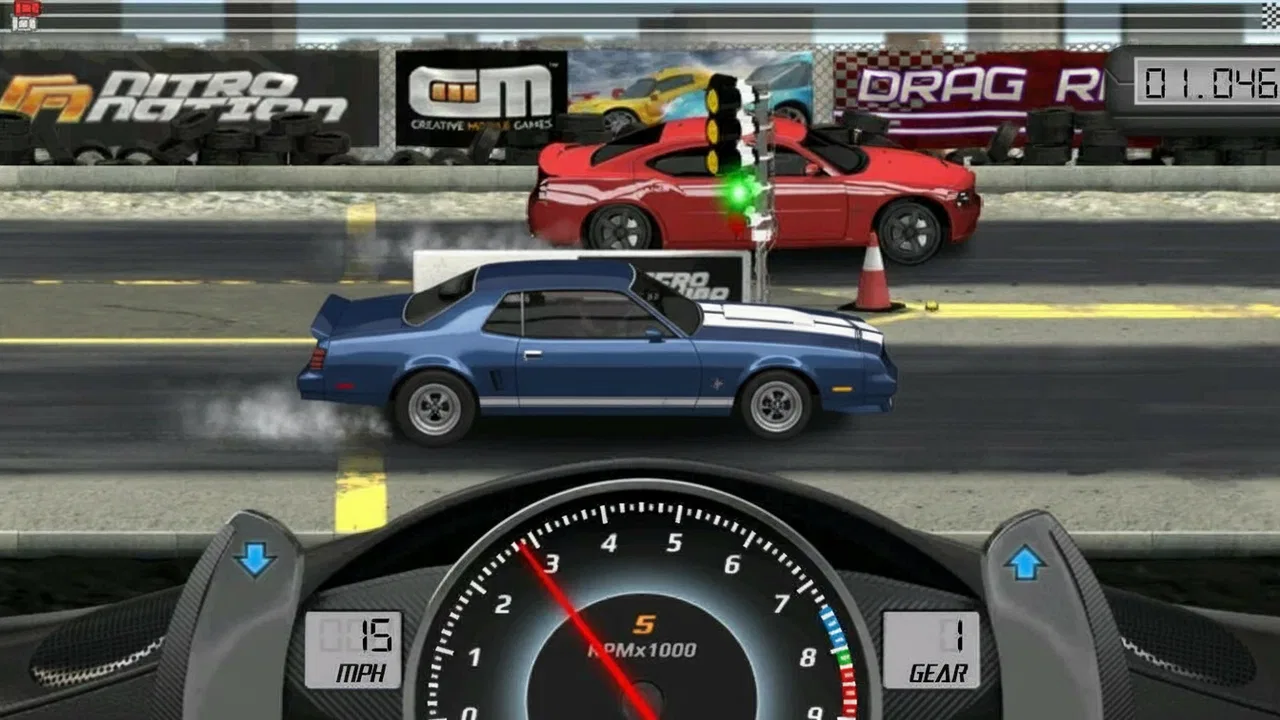
I first approached Drag Racing expecting a quick arcade racer, but its appeal became clearer after a few sessions: this is a game about making small decisions, testing them, and learning how much difference a well-timed launch can make. It focuses on straight-line races rather than steering through winding circuits, so the challenge comes from acceleration, shifting, tuning, and choosing the right car for the situation.
That narrow focus is also its strength. I can start a race in a short break, make a meaningful adjustment, and try again without needing a long uninterrupted session. At the same time, it is not simply a button-tapping game. Once the early races stop feeling effortless, progress depends on understanding the relationship between the car, its setup, and my timing. The result is a compact racing game that suits players who enjoy improvement through repetition more than players looking for a large open world.
How the current version feels to play
Drag Racing comes from Supercharge Mobile and remains a free game for Android, with a broad Everyone age rating. Its long presence on mobile is easy to understand: the basic race format is immediately readable, the controls are approachable, and the game can work well when I only have a few minutes. The current version is 5.5.0, and the experience still centers on the simple satisfaction of preparing a car and seeing whether my choices produce a quicker run.
You May Also Like

 AccuWeather: Weather Radar
AccuWeather Review: A Quick, Clear Forecast for Everyday Decisions
For everyday plans, the best forecast is the one you can understand quickly. AccuWeather makes rain timing, radar, and local conditions easy to act on, with a few trade-offs.

 Hill Climb Racing
Why Hill Climb Racing Still Turns Crashes Into One More Run
A tiny car, a bumpy hill and one more upgrade: Hill Climb Racing keeps resurfacing because its simple chaos makes every near-miss feel personal.

 AliExpress - Shopping App
AliExpress Makes Global Shopping Feel Personal, but Shoppers Bear the Risk
AliExpress turns a global marketplace into a pocket-sized discovery engine. Its reach is useful, its shopping loop compelling, and its trade-offs easy to miss.

 Lords Mobile: Kingdom Wars
Lords Mobile Is a Kingdom-Building Routine, Not a Quick Match
A case-by-case verdict on the building, battles, device demands, and social commitments that make Lords Mobile rewarding for some players and exhausting for others.

 PDF Scanner app - TapScanner
TapScanner Makes Paperwork Easier to Capture, Check, and Share
TapScanner makes scanning with a phone feel less like a rescue operation and more like a dependable step in getting work done. Its capture tools are useful, though not flawless.

 Block Blast!
 Shows How Much a Puzzle Game Can Leave Out
A quiet grid game shows why puzzle players increasingly value instant clarity, repeatable skill and low-pressure play—and where the genre still needs to catch up.
More From Our News Desk
View All News


The first thing I noticed is how different this feels from a conventional circuit racer. There is no need to memorize a series of corners or manage steering through traffic. I am watching the start, responding to the car’s behavior, and trying to shift at the right moments. That makes each race feel more like a short technical test than a miniature console race.
The game supports offline play, which is especially useful in places where a connection is unreliable. I can use it during a commute, in a waiting room, or while traveling without treating every session as an online event. The offline option also changes the mood of the game: instead of worrying about latency or another player’s connection, I can concentrate on tuning and execution.
There is also a direct competitive side through one-on-one racing. I like that the format keeps the contest understandable. If I lose, I can usually think about whether the problem was the launch, the shift timing, the car choice, or the setup, rather than blaming a crowded race or a complicated track incident. That clarity makes the game good for players who enjoy finding one specific mistake and correcting it.
Still, the stripped-down format will not satisfy everyone. If you want free-roaming exploration, dramatic crashes, detailed track layouts, or a large collection of race types, this is not the right choice. Its identity depends on repetition and refinement. The same focused structure that makes it convenient can eventually feel narrow if straight-line racing does not hold your attention.
Why the garage matters more than the first race
The garage is where the game becomes more interesting than its short store summary suggests. Buying or selecting a car is only the beginning. I have to think about how the vehicle behaves in relation to the race, then decide whether a change is worth testing. That creates a useful loop: race, identify the weakness, adjust, and race again.
Styling gives the collection side a more personal feel. Visual changes do not replace performance decisions, but they make the garage feel less anonymous. I enjoy having a car that looks like my choice rather than treating every vehicle as a disposable tool. For some players, that customization will be the reason to keep returning after the basic racing mechanics become familiar.
My most useful habit is to change only one thing at a time. If I alter several parts or settings before racing again, I cannot tell which decision helped. A single-change routine turns the game into a simple experiment and prevents the common frustration of spending resources without learning anything. This is a small approach, but it makes progression feel more deliberate.
Another practical tip is to avoid judging a car from one poor run. A missed shift can make a capable setup look weak, while a lucky launch can hide a problem. I prefer to repeat a race under similar conditions before deciding that a vehicle needs work. That matters particularly when a small timing mistake is more important than a large-looking garage upgrade.
Timing, tuning, and the value of short sessions
The controls are easy to understand, but consistency is harder than the first few races suggest. A good launch can put the car in a favorable position immediately, while a poor start may force me to chase the rest of the run. Shifting is similarly important: I am not merely pressing buttons whenever they become available; I am trying to make the sequence smooth enough that the car keeps building speed.
This is where the game works well as a short-session experience. I can play several races, notice a pattern, and stop before the repetition becomes tiring. When I return later, I still have a clear objective, such as improving the opening or testing a different setup. It does not demand the same commitment as a full racing campaign.
For new players, I recommend learning the rhythm before spending heavily on upgrades. Early progress is a useful training period, and rushing toward a stronger car can hide the timing skills that remain important later. I found it more satisfying to become consistent with a modest setup than to depend entirely on improvements in the garage.
One non-obvious trade-off is that tuning can make a car feel better for one purpose while making it less comfortable elsewhere. A setup that helps with a particular straight-line challenge may not be the best general choice. I therefore treat the garage as a set of specialized tools rather than searching for one perfect car. That mindset reduces disappointment when a favorite vehicle is not ideal in every situation.
Playing offline and choosing the right moment for competition
Offline play is more than a convenience here. It lets me use the game as a dependable time-filler without planning around a network. I can practice launches, experiment with a car, and work through races when I am away from home. For someone who wants a racing game that remains usable during travel, this is a meaningful advantage over games built around constant connectivity.
When I move into one-on-one competition, the experience becomes more demanding. A human opponent gives every mistake more weight, and a familiar setup may not be enough if my execution is inconsistent. I prefer to practice offline first, especially after changing a car. That preparation does not guarantee a win, but it makes the contest feel like a test of decisions instead of a guess.
The one-on-one format also makes the game suitable for players who dislike chaotic multiplayer racing. There is less visual clutter and a clearer reason to improve. On the other hand, anyone who enjoys large online grids, bumping, overtaking battles, or live track strategy may find these races too restrained.
A realistic use case is a player who has ten minutes before an appointment. I can run a few offline races, make one tuning adjustment, and leave with a specific lesson rather than an unfinished long event. Later, I can return to the same car and decide whether the change actually helped. That kind of stop-and-start routine fits mobile gaming unusually well.
What the long development history means today
The game was released on April 9, 2011, and its continued presence says something about the durability of its central idea. Straight-line racing is simple enough to understand immediately, yet timing and tuning provide room for practice. The current 5.5.0 version shows that the product has continued through updates rather than remaining frozen as an old release.
I would not interpret the version number as a promise that the game has become a modern, feature-heavy racing platform. Its core remains focused, and that is important when setting expectations. The evolution is most valuable to existing users when it preserves the quick races, garage decisions, and offline convenience that make the game recognizable in the first place.
For a new player, the age of the game is not automatically a disadvantage. In fact, the established formula can make it easier to understand what kind of experience I am getting. I am not entering a sprawling simulation with a long tutorial or a complicated map. I am entering a compact drag-racing loop that asks me to improve through repeated attempts.
At the same time, players coming from newer racing games may notice the difference in ambition. Modern alternatives often emphasize licensed cars, elaborate visuals, large environments, or cinematic presentation. Drag Racing places less emphasis on spectacle and more on the small decisions inside a short run. Whether that feels refreshing or dated depends largely on what I want from a mobile racer.
How it compares with other mobile racing choices
Compared with circuit racers, this game is easier to pick up but less varied in moment-to-moment movement. I do not need to learn braking points, corner entry, or racing lines. That makes it a better choice for someone who wants quick technical contests, while a circuit-focused player may prefer the broader skill set of steering and positioning.
Compared with arcade racers built around drifting and visual effects, Drag Racing feels calmer and more analytical. The excitement comes from a clean run and a successful adjustment rather than from a spectacular crash or a dramatic shortcut. I find it more rewarding when I am in the mood to improve a specific result, but less entertaining when I want constant visual action.
Compared with full racing simulators, it is much more accessible. The game does not ask me to manage a long race or master a large set of controls. That accessibility is a strength for casual players, although simulation fans may find the straight-line format too limited. The best alternative depends on whether I value quick repetition, track variety, or realism above all else.
The game has reached over one hundred million installs and holds a 4.1 average from around two and a half million ratings, with roughly one hundred eighty-six thousand written reviews. Those figures fit my impression of a long-running, widely recognized mobile racer, but popularity should not be confused with universal appeal. The focused design remains the deciding factor.
Free access, purchases, and sensible spending
Drag Racing is free to download, which makes it easy to test without committing money at the start. It includes in-app purchases ranging from $1.99 to $599.99 per item, so I would approach the store carefully and decide in advance whether I am comfortable spending. The broad range means the free entry point and the potential spending experience can feel very different for different players.
My advice is to play long enough to understand the progression before buying anything. If I purchase an upgrade before learning whether my real problem is timing, I may spend money while leaving the underlying weakness untouched. The game is more satisfying when purchases, if I choose to make them, support a decision I already understand rather than replace practice.
Parents should also remember that an Everyone rating describes the content suitability, not spending habits. Because the game is free to begin and offers paid items, device-level purchase controls are sensible for younger players. That is a practical consideration even when the racing itself is appropriate for a wide audience.
The most important question is whether I enjoy the core loop without pressure. If I like running tests, improving a launch, and refining a car, the free version gives me a fair way to discover that. If I dislike repeating short races or feel pushed toward faster progress, paying more is unlikely to solve the mismatch.
Who should play it and who should skip it
I recommend this game to players who enjoy cars but do not necessarily want a demanding simulation. It is also a good fit for anyone who likes progress built from small improvements. The combination of offline access, short races, tuning, and one-on-one competition gives it a clear purpose on a phone.
It suits patient players particularly well. The strongest results come from observing what went wrong and making a controlled change, not from randomly buying the most attractive improvement. If that process sounds satisfying, the game can remain engaging longer than its simple presentation might suggest.
I would skip it if my priority is exploration, realistic track racing, deep multiplayer variety, or a constantly changing visual experience. I would also be cautious if I know I dislike repeated attempts after a mistake. The game deliberately asks me to retry similar situations, and that is central to its design rather than a minor inconvenience.
Players who want a racing game for occasional offline use should give it a chance. Players seeking a replacement for a console-style racing campaign should look elsewhere. The distinction is important: this is a focused drag-racing workshop, not a complete motorsport world.
What I would watch as a returning player
For existing users, the main question is whether future changes continue to improve the experience without weakening its directness. I would watch for refinements that make tuning easier to understand, keep offline play dependable, and preserve fair-feeling one-on-one races. Those areas affect the daily usefulness of the game more than decorative additions would.
I would also pay attention to how the progression balances free players and people who buy items. The free entry point is valuable because it lets players learn the mechanics first. If progression becomes too dependent on spending, the careful experimentation that gives the game its character could feel less rewarding.
For now, version 5.5.0 represents a mature form of a focused idea rather than a reinvention. I enjoy it most when I treat each race as a small test: choose a car, make one thoughtful adjustment, concentrate on the run, and review the result. That approach brings out the depth that is easy to miss when the game is judged only by its simple controls.
My final recommendation is straightforward: try it if you want offline drag racing with tuning and quick one-on-one challenges, and give yourself time to learn the rhythm before judging the garage. I would not recommend it as a universal racing game, because it intentionally leaves out the track variety and spectacle many players expect. But for a free, compact racer built around timing and incremental improvement, Drag Racing remains a practical and surprisingly thoughtful choice.
FAQs for Drag Racing
01What is the main objective of Drag Racing?
In Drag Racing, the main objective is to compete in head-to-head races, focusing on precision and speed. Players must skillfully manage their vehicle's acceleration and gear shifting to outperform opponents. Winning races earns rewards, allowing you to upgrade and customize your car to improve performance and tackle tougher challenges.
02How can I upgrade my car in Drag Racing?
Upgrading your car in Drag Racing involves earning in-game currency by winning races. You can then invest in various enhancements like engine upgrades, improved tires, and better aerodynamics. Customization options allow for performance tweaks and aesthetic changes, giving you a personalized racing experience and a competitive edge.
03Are there different game modes in Drag Racing?
Yes, Drag Racing offers several game modes to keep the gameplay engaging. Players can compete in Career Mode to advance through levels, participate in online multiplayer races, or challenge friends. Each mode offers unique rewards and opportunities to improve your skills and vehicle capabilities.
04Is Drag Racing suitable for beginners?
Drag Racing is designed to be accessible for beginners, with intuitive controls and straightforward gameplay mechanics. The game provides tutorials and guides to help new players understand the basics of racing and car management. However, as you progress, the challenges become more complex, offering depth for experienced players as well.
05Does Drag Racing require an internet connection to play?
Drag Racing supports both offline and online play. You can enjoy single-player modes without an internet connection. However, to access multiplayer races, leaderboards, and live events, an active internet connection is required. This allows for a dynamic experience with regular updates and community interaction.
Pros
- Simple and intuitive controls for easy gameplay.
- Wide variety of cars to race and upgrade.
- Quick races perfect for short play sessions.
- Engaging multiplayer mode for competitive fun.
- Regular updates with new features and content.
Cons
- Limited customization options for cars.
- In-app purchases can be intrusive.
- Graphics are outdated compared to newer games.
- Lack of story or campaign mode.
- Repetitive gameplay can become monotonous.

Drag Racing
Gallery